


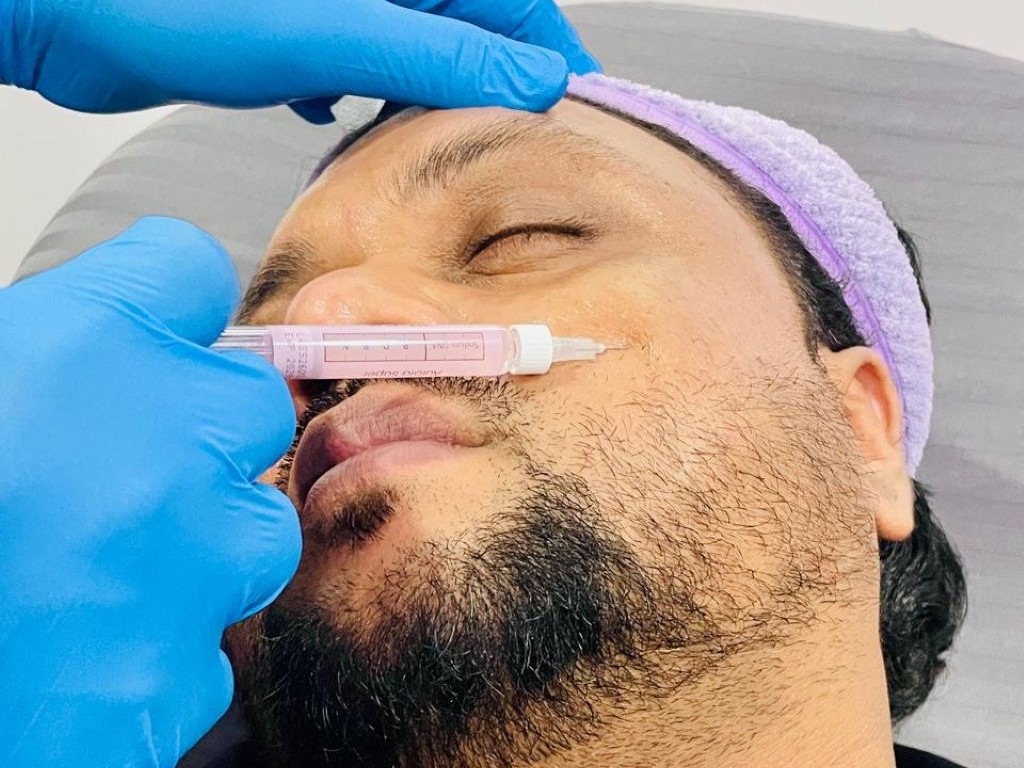
Acne Scars: Why They Form and How Aesthetic Treatments Can Help
Acne scars are not just “marks” on the skin. They are the result of deeper inflammation that damages the skin’s collagen during the healing process. When acne becomes inflamed, especially deep pimples, cysts, or nodules, the body tries to repair the injured area. If too little collagen is produced, the skin sinks inward, forming depressed scars. If too much collagen is produced, the scar becomes raised. This is why correct early acne treatment is the first step in preventing scars.
The commonest acne scars are atrophic scars, which means depressed scars. These include ice pick scars, boxcar scars, and rolling scars. Ice pick scars are narrow, deep scars that look like tiny holes in the skin. They form when inflammation destroys collagen in a deep, vertical pattern. Because they are deep and narrow, surface treatments alone usually do not give the best result. Treatments such as TCA CROSS, where a strong chemical solution is carefully applied inside the scar, can stimulate collagen formation from the depth of the scar. In selected cases, punch excision may also be considered.
Boxcar scars are wider, round or oval depressions with sharper edges. They usually occur when acne inflammation causes loss of collagen in a broader area. Shallow boxcar scars may respond well to microneedling, fractional laser, radiofrequency microneedling, chemical peels, and PRP/GFC-supported treatments. Deeper boxcar scars may need a combination approach, because one treatment alone may not correct both the depth and the edge of the scar.
Rolling scars give the skin an uneven, wave-like appearance. These are formed when fibrous bands pull the skin down from underneath. For this type, subcision is one of the most useful treatments. Subcision releases the tight bands under the skin, allowing the depressed area to lift gradually. It is often combined with PRP/GFC, microneedling, RF microneedling, or dermal fillers to improve collagen production and restore smoother skin texture.
Some patients develop hypertrophic scars or keloid scars, which are raised scars caused by excess collagen formation. These are more common on the chest, shoulders, jawline, and back. Treatments may include steroid injections, silicone therapy, laser treatment, and other scar-modifying procedures, depending on the scar thickness and skin type.
At My Cosmetic Clinic, we believe acne scar treatment should be personalized. Many patients have more than one scar type on the same face, so a careful skin assessment is essential before deciding the treatment plan. Our approach combines medically guided aesthetic treatments such as TCA CROSS, microneedling, RF microneedling, subcision, chemical peels, PRP/GFC, laser-based treatments, and skin rejuvenation procedures to improve texture, stimulate collagen, and restore confidence.
Acne scars cannot always be removed completely, but with the correct combination of treatments, they can be significantly improved. The best results come with patience, proper diagnosis, professional care, and a treatment plan designed for your unique skin.
Dr. Harsha Jayakody
Aesthetic & Cosmetic Physician
MBBS (Sri Lanka), MBA in Health Admin (Malaysia), MSc (Sri Lanka),
MD (Sri Lanka)
Diploma in Aesthetic Medicine (PIA)
Member of CFAT (New Delhi)
Member of the American Academy of Aesthetic Medicine (AAAM)
Board Certification from IEBDAC (UK)