


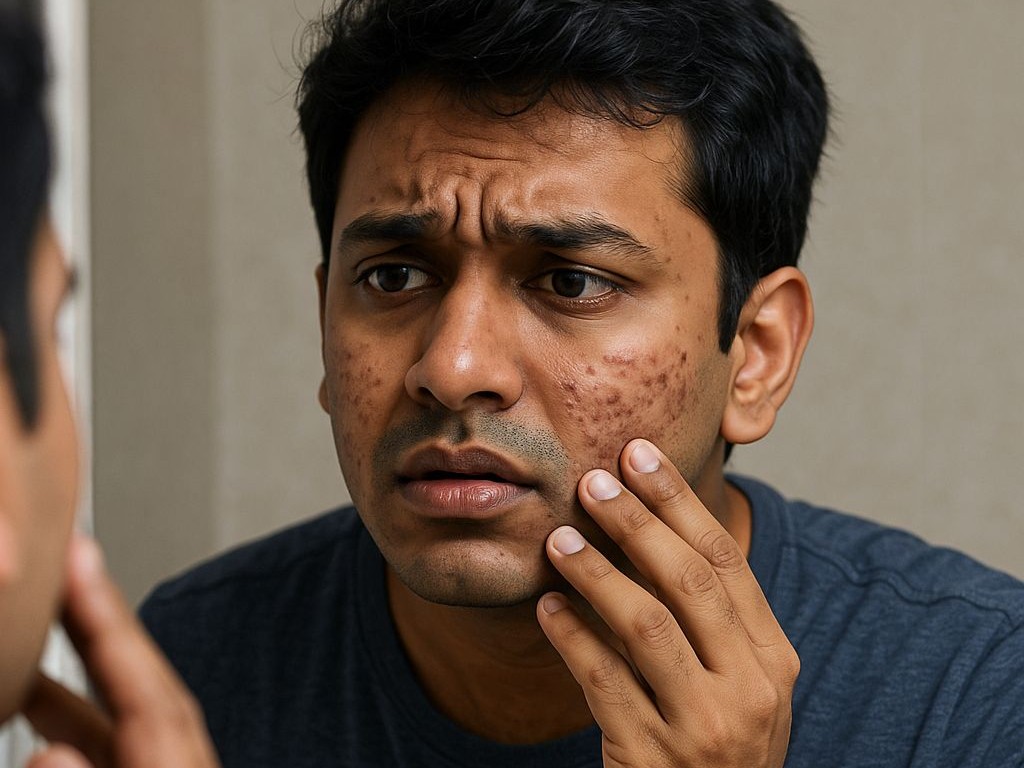
Goodbye Acne Scars : Understanding Types and the Best Treatments
Acne scars do much more than change how the skin looks. For many people, these marks are a daily reminder of past breakouts. They can make someone feel shy, avoid photos, or even hesitate to speak up at work or in social situations. When you do not feel comfortable in your own skin, your confidence and even your personality can slowly change. The good news is that today we have many safe and effective aesthetic treatments to soften these scars and help you feel like yourself again.
Acne scars appear when the deeper layer of the skin (the dermis) is damaged by inflammation. When a pimple is very red, painful, or squeezed roughly, the skin’s healing process can be disturbed. Sometimes the body breaks down too much collagen, leaving a hollow scar. Other times it produces too much collagen, creating a raised scar. Your genes, skin type, how long acne was left untreated, and habits like picking all play a role.
Most acne scars on the face are “atrophic” scars, which look like dents or pits. Ice pick scars are deep and narrow, as if the skin has been pierced with a tiny needle. Boxcar scars are wider with sharper, defined edges, often seen on the cheeks and temples. Rolling scars have soft, sloping edges that make the skin look uneven and wavy, especially in certain light. Raised scars, called hypertrophic scars and keloids, are thicker, firm to the touch, and sit above the skin surface.
At https://mycosmeticclinic.lk/ we use several advanced treatments that work by boosting your own collagen to smooth these scars over time. MNRF (Radiofrequency microneedling) combines very fine needles with controlled radiofrequency heat to stimulate deep collagen remodelling. It is especially helpful for rolling and boxcar scars and also tightens the skin. GFC (Growth Factor Concentrate) uses growth factors prepared from your own blood. When combined with microneedling, it supports healing and improves scar texture and skin quality. Microneedling itself creates tiny, controlled injuries on the surface, signalling the skin to repair and form fresh collagen. For deeper, tethered scars, we use subcision, a minor procedure where a special needle is used under the skin to release scar bands so the surface can lift up. Collagen mono threads can be placed under selected scars to support the skin and encourage new collagen formation. For suitable patients, laser treatments can further refine texture, reduce redness, and blend scars with the surrounding skin. Often, the best results come from combining these methods in a personalised plan.
Over time, these gentle but powerful treatments help the skin rebuild itself from within, softening scars and restoring a smoother, more even texture. As patients notice these changes, they often feel more comfortable at work, in photos, and socially. With patience, multiple sessions, and proper aftercare, many people see a clear improvement in both their skin and their self-confidence.
Dr. Harsha Jayakody
Aesthetic & Cosmetic Physician
MBBS (Sri Lanka), MBA in Health Admin (Malaysia), MSc (Sri Lanka),
MD (Sri Lanka)
Diploma in Aesthetic Medicine (PIA)
Member of CFAT (New Delhi)
Member of the American Academy of Aesthetic Medicine (AAAM)
Board Certification from IEBDAC (UK)